
State of ALDFG Research (2024)
We saw another increase in ALDFG publications in 2024, and are featuring 33 papers, reports, and presentations featured in this Annual Report. While this may not be an exhaustive literature review, we have summarized these publications into the following themes: natural processes, biodiversity and conservation, baseline studies, plastics and end-of-life solutions, technology, regional and international perspectives, and policy. We accessed these publications via Google Scholar notifications and member submissions, and they include peer reviewed research, project reports, theses, and presentations from a variety of academic journals, NGOs, international organizations, and consultants globally. This summary provides an overview of ALDFG work from various perspectives on local, regional, and international levels to help us understand the current state of ALDFG around the world. For more information, please find these resources in the Resource Library of our GGGI Data Portal.

Natural Processes
Various studies in 2024 highlighted how ALDFG interacted with natural oceanographic and ecological processes. This research deepens our understanding of ALDFG impacts on biological and chemical levels and allows us to see large scale distribution patterns. This information could inform management and policy at various levels to aid in marine conservation efforts.
Berg et al. created a model that found high correlations between the proximity of the North Pacific Garbage Patch to Hawaii and the number of marine debris collected during beach cleanups (1). The location of the NPGP can change slightly depending on larger oceanographic patterns, but generally more marine debris were found the closer the NPGP was to the Hawaiian Islands (1). As marine debris in the NPGP is made of ALDFG, this is especially relevant for the conservation of the endangered Hawaiian Monk Seal that is at high risk for entanglement (2).
A PhD dissertation assessed the impacts of plastic recreational and commercial fishing gear on the decomposition of coastal kelp detritus (Ecklonia radiata) (3). They conducted outdoor experiments testing soft plastic lures with nylon lines and commercial-grade fish netting to assess how the kelp decomposed in current and projected future ocean temperatures (3). The commercial grade fish netting increased the change in nitrogen in the kelp detritus over time, and the soft plastic fishing lures significantly decreased the total decomposition of the kelp detritus and its carbon:nitrogen by 14.4% over time (3). It is possible that these fishing gears reduced the kelp decomposition over time due to the longevity of the plastic materials and its treatment with anti-fouling agents (3). These results indicate that different types of plastic fishing gears could have different impacts on how organic seafloor material decomposes and therefore how energy moves to other levels of the marine food web.
Almedia et al. used lab and marina experiments to understand metal and polycyclic aromatic hydrocarbon (PAH) adsorption on plastic fishing nets4. These experiments showed that copper, lead, and PAHs all create films over plastic fishing nets in varying degrees, depending on the thickness and polymer composition of the net (4). Generally, thicker, braided nylon nets most often used in trawling showed the most adsorption whereas thinner nylon nets showed less. Copper, lead, and PAH adsorption increased on the nets over time, which could potentially make lost fishing nets into pollution ‘hotspots’ and increase marine organisms’ exposure to these contaminants (4).
These studies provide some understanding of how ALDFG is both affected by some natural processes (e.g. oceanography) and impacts others (e.g. organic material degradation, chemical adsorption) in the marine environment, but more research is needed. Future research topics could include how UV impacts fishing gear breakdown in the environment and microplastics from ALDFG.
Biodiversity & Conservation
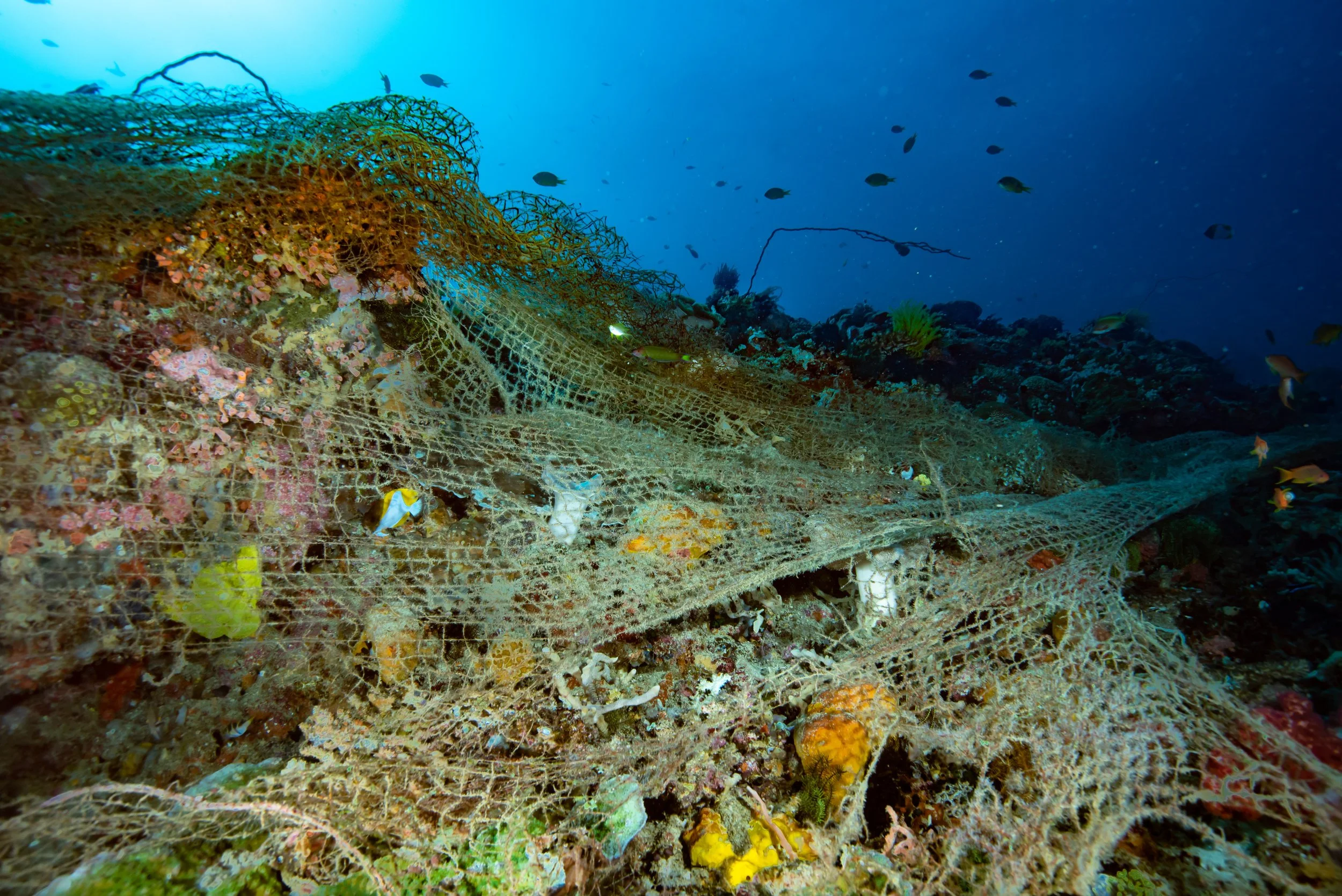
ALDFG is the deadliest form of aquatic plastic pollution, harming wildlife and ecosystems globally. These impacts extend to economically important and endangered species, so it is important to quantify and understand ALDFG’s impacts on a variety of species and habitat types. Various studies from 2024 quantified this threat in data poor regions, including Africa, India, Albania, and the broader Pacific Ocean.
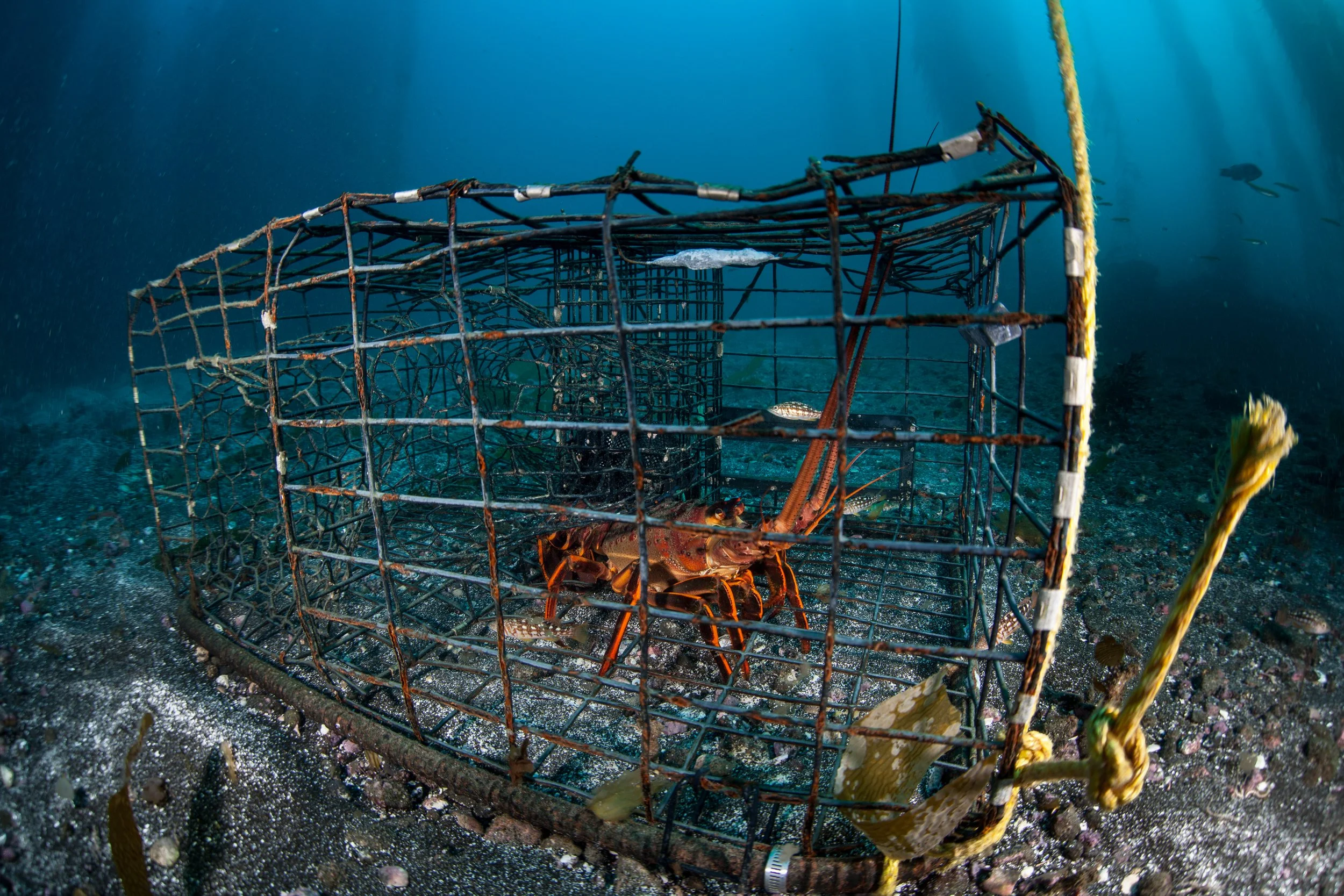
Satoh et al. assessed ghost fishing in Lake Tanganyika, located in the Republic of Zambia (5). This area is a biodiversity hotspot and very important to local food security and evolutionary biology research. Lake Tanganyika also represents the many inland freshwater aquatic environments that have limited data on ALDFG. Via scuba diving surveys, researchers found that ghost fishing was happening in 50% of monofilament nets in the lake, with two endemic crab species making up 65.2% of animals captured by these ghost nets (5). It is possible that fish species were entangled in these nets at one point but were not recorded because the soft tissue of fish decompose faster than the hard exoskeletons of crustaceans (5). Additionally, more organisms were captured as the length and mesh size of the monofilament nets increased (5). A study in the Bay of Bengal, India found a total of 125 different species entangled in nylon ghost nets between January 2020 and December 2022 (6). Researchers found more ghost nets during the winter and summer seasons (6), and that crabs and crustaceans were the most common organisms found in ghost nets, similar to Satoh et al., 2024 (6). During one of these sampling events, researchers found the first occurrence of a vulnerable (as per the International Union for the Conservation of Nature Red List of Threatened Species) seahorse species, Hippocampus kelloggi, entangled in a nylon ghost net (7). These studies show the impacts of ghost fishing on various types of organisms, including those that are important for local food security and those that are international conservation priorities.
Understanding patterns of ALDFG occurrence can reduce its impacts on marine and aquatic species by aiding in conservation and cleanup efforts in vital habitats. Escalle et al. used a model to assess and quantify the connectivity between dFAD deployment areas and important habitats of critically endangered leather back & hawskbill sea turtles in the Pacific Ocean (8). This model simulated dFAD drift patterns under two different scenarios and found that 60% of dFADs released in equatorial areas in the model were arriving in essential sea turtle habitat, but this was less common in the simulation where dFADs were released in specific dFAD areas (a similar practice to what the fishing industry is currently doing) (8). The simulations found some overlap with the following areas: the migration and feeding habitats of east Pacific leather back sea turtles in the tropical southeast Pacific; the coastal habitats of leatherback and hawksbill in the western Pacific (e.g. Indonesia, Papua New Guina, Solomon Islands); and the foraging habitat of leatherback in a large equatorial area south of Hawaii (8).
Studies from 2024 have shown that ALDFG removal and increasing fisher awareness can reduce marine animal entanglement. Researchers compared sea turtle entanglement in Drini Bay, Albania before (2019) and after (2022) ALDFG removals and a fishermen awareness campaign (2024) (9). They found a 24% reduction in the total number of sea turtles entangled after removing 5.45km of ghost nets (9). Additionally, fishers intentionally discarding gear at sea reduced from 13% to 6% (9). Baker et al. reviewed over 40 years of Hawaiian monk seal entanglement data before and after large-scale debris removal efforts were initiated in the Northwest Hawaiian Islands (2). ALDFG accounted for 75% of items entangling the 437 endangered and endemic monk seal records included in the study (2). There was a large decrease (up to 71%) in monk seal entanglement rates where debris removal was most concentrated (2). This study illustrates that consistent and large-scale ALDFG removal can benefit endangered species and could be restorative to the rest of their habitat (2).
Baseline Studies
Case studies can fill knowledge gaps in specific geographies while providing a framework for future research in other places. Some publications in 2024 provided baseline ALDFG information in data limited areas, about ghost fishing via self-baiting traps, and drifting fish aggregating devices in the Indian Ocean. These studies add to the growing body of ALDFG literature while providing inspiration to expand upon work in other regions.
The first study aiming to understand fishing gear loss in the Gulf of Gabes, Tunisia was conducted in 2024 (10). Located in the Mediterranean, this area hosts high levels of marine biodiversity and is an important fishing area. Researchers interviewed 540 fishers across (10) ports between 2019 and 2020, and found varying loss rates amongst different gear types, with longlines having the highest lost rate of 59% (10). Fishers lost gear due to underwater obstructions, conflicts with other fishing gears, marine animal entanglement, bad weather, and intentional dumping of gear at sea (10). Spatial analysis indicated two concentrations of ALDFG in the Gulf of Gabes that overlap with longline and trawl fishing depths (10). To reduce gear loss, researchers recommended that fishers improve their vessel equipment, campaigns to raise awareness amongst fishers, implementing waste management strategies, and exploring economic incentives for ALDFG recovery (10).
Self-baiting in a commonly mentioned impact of ghost fishing, where new animals are attracted to dead animals within a derelict trap. Cerbule et al. conducted an experiment to assess the ghost fishing efficiency by simulated self-bated snow crab pots with dead snow crab compared to the catch efficiency of actively fished baited pots in the Barents Sea (11). They found that on average, the self-baited pots only captured 0.4% of target-sized snow crabs compared to the actively fished pots (11). This could be due to the snow crabs being deterred from the self-baited pots due to the presence of dead conspecifics, which could indicate potential danger (11). This study indicates that self-baiting may not be as negative of an impact on snow crab fisheries as originally thought, however, results may vary due to differences between fisheries and target species.
Drifting fish aggregating devices (dFADs) are at risk for ghost, and possible IUU, fishing when they drift outside of their originally intended fishing areas. Sheik Heile et al. analyzed 63 derelict dFADs collected from the Somalian shelf over a 6-month period and found that none of them complied with the Indian Ocean Tuna Commission regulations (12). They estimated that 1395 dFADs could be recovered annually on the Somalian Shelf, emphasizing the need for enhanced monitoring and IOTC cooperation to address the impacts of these derelict dFADs (12).
Plastics & End-of-Life Solutions
ALDFG comprises a significant amount of marine plastic pollution, and small net fragments can add up over time to accumulate into larger amounts of debris. For example, one study modelled the distribution of marine plastic debris from demersal trawl fisheries (mainly net fragments from mending) along Scotland’s Atlantic coast and estimated approximately 234 - 614 tonnes of debris entering the ocean annually (13).
As plastic fishing gear is strong enough to persist in the ocean for prolonged time periods, researchers are interested in finding biodegradable and end-of-life solutions for this gear. However, many in the fishing and seafood wholesale industry believe that biodegradable fishing gear is less robust than traditional gear, leading to reduced catches. This was seen in a study conducted by Forse et al., where seafood wholesalers from Newlyn, UK were interviewed. However, the seafood wholesalers did see small potential in the marketability of products caught with biodegradable fishing gear (14).
Regardless of the status of biodegradable fishing gear development, it is of utmost importance to find end-of-life (EOL) solutions to traditional plastic fishing gear. One study found that recycled polypropylene from fishing gear can be reinforced with glass fibers to create 3D printer filaments, which could help reduce ocean plastic (15). On a regional scale, Havas et al. compared the EOL circularity potential of the six most common commercial fishing gears in Norway (16). Using expert consultation and a multi-criteria decision analysis, they considered the economic and environmental sustainability and technology feasibility of each gear’s EOL management. They found that in Norway, purse seines, trawls, and Danish seines had the most circularity potential whereas gillnets, longlines, and traps were more challenging to manage (16).
Technology
ALDFG can be difficult to located in marine and aquatic environments due to limited visibility, navigational challenges, and weather conditions. Various types of technology can help find and remove ALDFG, making clean-up efforts more efficient. Side scan sonar and ROVs are common ways to find ALDFG (17, 18). In Scotland, Benjamins et al. found that sides scan sonar was a good tool for discovering and mapping ALDFG from creel fleets, which can then be further examined using ROVs (17). Morais de Oliveira found that sonar and unmanned surface vehicles (USVs) were the most effective at detecting ALDFG in field tests conducted in Portugal, and that neural networks were very accurate in characterizing the ALDFG images (18). However, the efficacy of sonar, ROV, and USV technology often depends on weather conditions, as high winds and waves can affect vessel movement and therefore reduce the image quality produced by the equipment (17, 18).
Currently, most work locating and removing ALDFG relies on dedicated missions where a vessel and a crew are scheduled to physically do the work over a certain amount of time. This can be expensive and time consuming. Defraeye and Shoji have conceptualized an autonomous buoy that collects derelict fishing nets passively that uses satellite signals to indicate to near-by vessels that it is ready for removal (19). These passive buoys use the difference in their drifting speed (via wind) and the derelict nets’ drifting speed (via current) to catch and disable the net (19). While this concept does come with caveats (e.g. international government coordination, identification between active and derelict nets, also becoming marine debris), it does represent a unique and low-effort way to remove ALDFG from the ocean (19).
Regional and International Perspectives
ALDFG issues and patterns differ regionally depending on the environment, existing fisheries and management, and other infrastructure. Therefore, regional work can help inform actionable management and policy interventions. In Puget Sound, Natural Resources Consultants (NRC) worked with the Washing Department of Fish and Wildlife (WDFW) in Washington, USA to reduce lost shellfish pots (20, 21). NRC suggested creating a voluntary quiz to be taken upon the sale of recreational shellfish licenses so that license holders can assess their knowledge on best practices to reduce trap loss (20). Additionally, with stakeholder input, NRC created a strategic action plan for WDFW to reduce the number and impact of lost shellfish pots in Puget Sound (21). Some of the strategies implemented in this plan included communication and outreach programs, requiring all pots to have escape cords and hatches, and regular lost pot removals (21). To develop recommendations on EOL fishing gear management in the UK, Whale and Dolphin Conservation (WDC) surveyed 464 fishing harbours about their waste reception facilities and fishing gear management practices (22). While 93% of the surveyed harbours provide waste reception facilities, there is significant variation in the cost of waste disposal and which gear types are accepted (22). Fishing gear waste management was seen as an issue by these fishing harbours, requiring a coordinated effort at local, national, and international levels to improve (22). WDC provided several recommendations to ameliorate the issue regionally, including making ALDFG and EOLFG disposal free across the UK, enhancing and standardizing collection and disposal infrastructure, introducing extended producer responsibility schemes, and fisher education (22).
International collaboration between countries in similar regions, or experiencing similar challenges, can help inform solutions to ALDFG and EOLFG. SHIFTPLASTICS, a collaborative and interdisciplinary initiative focused on creating circular value chains for plastics from the fishing and aquaculture industry (23). They hosted a knowledge sharing workshop with partners from Scotland, Denmark, and Canada to understand their challenges and successes with fisheries and aquaculture plastics (23). These countries shared similar issues, including lack of shared responsibility across the entire value chain and immature markets for fisheries and aquaculture plastic waste (23). Additionally, INTERREG created the Blue Circular Nets (CIRCNETS) project with partners from Finland, Iceland, Ireland, Norway, and Sweden to create an EOLFG collection system for fishing and aquaculture gear amongst these sounds (24). They cited the GGGI in their report, highlighting the GGGI’s Best Practice Frameworks, international policy, and support of local and regional work (24). Through the CIRCNETs project, INTERREG determined that differences in EOL fishing and aquaculture gear management practices amongst partner countries are related to the amount of waste collected, size and structure of their fisheries, the presence of sorting and recycling infrastructure, and funding opportunities (24). Sustainable Seas Trust collaborated with African stakeholders to make a best practice guide for the management of ALDFG on the continent, as existing best practices were not relevant to less developed countries (25). The guide describes the issue in an African context and provides several case studies to illustrate regional solutions. Some recommendations to address ALDFG and EOLFG in Africa include: collecting baseline data and long-term monitoring, fishing gear marking, lost fishing gear reporting, fishing gear recovery, having research inform policy, providing adequate waste reception facilities, and implementing extended producer responsibility schemes (25).
Policy and Management
There have been more calls for policy interventions as the scientific community learns more about ALDFG occurrences globally. ALDFG does not recognize state borders, encouraging researchers and other organizations to urge policy makers to collaborate on efforts to reduce ALDFG impacts regionally and internationally in 2024. This is especially important considering the on-going International Negotiating Committee (INC) meetings, as the Internationally Legally Binding Instrument to End Plastic Pollution (ILBI) represents a huge opportunity to reduce ALDFG and its impacts around the world.
Several resources in this literature review provided guidelines and recommendations for policies to mitigate ALDFG issues on a regional level. In 2024, Bousella et al. published a set of guidelines to mitigate impacts of ALDFG in Tunisia, an understudied yet ecologically and economically important area in the Mediterranean Sea (26). These guidelines were based on previous work, where researchers thoroughly consulted with local stakeholders to understand the present state of ALDFG in Tunisia and its impacts on local fishers and fisheries sustainability (26). The GGGI was featured alongside the Food and Agricultural Organization (FAO), International Convention for the Prevention of Pollution from Ships (MARPOL), and United Nations Convention of the Law at Sea (UNCLOS) as international instruments that help manage ALDFG globally (26). Researchers also proposed using legislature for a tri-lateral co-operation amongst the Philippines, Indonesia, and Malaysia to mitigate ALDFG in the Sulu-Sulawesi Sea (27). The Sulu-Sulawesi Sea is a region with high biodiversity and important fisheries and therefore could benefit from a collaborative agreement across the three bordering countries. Tuna Regional Fisheries Management Organizations (RFMOs) and other Regional Fisheries Bodies (RFBs) are tools that manage fisheries across different countries that share a body of water. RFBs facilitate lost gear reports to FAO, as fishers report their lost gear to their member state that then provides that information to its respective RFB, which in turn sends it to FAO (28). In their PhD thesis, Andreassen suggests that an ecosystem approach to RFMO fisheries could minimize marine ecosystem impacts, including ALDFG in the target region (29). Additionally, they found large gaps between RFMO obligations and their current actions due to various issues including slow internal changes and responses to scientific literature, competing interests, and economic barriers (29).
On a larger scale, there were several pieces of work published in 2024 that highly recommended international collaboration to create effective policies that address ALDFG. Overall, Simaanchana et al. recognized the GGGI, FAO, and UNEP as organizations involved in ALDFG prevention, retrieval, and remediation (30). The authors suggested various general solutions to mitigate ALDFG issues globally including improving management practices, increasing fishing gear strength, using biodegradable nets, using submersible drones to retrieve ALDFG, education efforts, technological improvements and international collaboration (30). Some researchers suggested strengthening existing vessel enforcement via revisions to Annex V of MARPOL 73/78 Convention and increasing collaboration between the International Maritime Organization (IMO) and FAO (31). In terms of new international policies, the World Bank outlined their findings from the side events hosted by various participating organizations (UN Environment Programme, FAO, International Union for Conservation of Nature, World Wildlife Foundation, Ocean Conservancy, GGGI, International Coalition of Fisheries Associations and International Collective in Support of Fishworkers) at INC-2 and INC-3 (32). They found a fragmented ALDFG management approach, as ALDFG is addressed through fisheries management while EOLFG is addressed through waste management (32). The World Bank strongly suggested integrating ALDFG management practices into a holistic way that addresses all parts of its life cycle and suggested that the ILBI could provide this cohesive global approach (32). FAO’s work surveying fishers globally about their gear loss and their e-learning course on implementing the ‘Voluntary Guidelines on the Marking of Fishing Gear’ will be good resources to inform these global efforts (33).
End Notes
Allison, N.L., Dale, A.C., Narayanaswamy, B.E., Turrell, W.R., 2024. Investigating local trawl fishing as a source of plastic beach litter. Mar. Pollut. Bull. 205, 116627. https://doi.org/10.1016/j.marpolbul.2024.116627
Almeida, C.M.R., Perdigão, R., Correia, B.R., Van Der Gracht, H., Dias, S., Magalhães, C., Carvalho, M.F., Mucha, A.P., Espincho, F., Ramos, S., 2024. Potential of fishing nets for adsorption of inorganic (Cu and Pb) and organic (PAHs) pollutants. Mar. Pollut. Bull. 209, 117291. https://doi.org/10.1016/j.marpolbul.2024.117291
Andreassen, I.S., 2024. Charting the Implementation of the Ecosystem Approach to Fisheries in Tuna RFMOs: Challenges and Opportunities for Future Conservation of Non-Target Species. The Arctic University of Norway.
Baker, J.D., Johanos, T.C., Ronco, H., Becker, B.L., Morioka, J., O’Brien, K., Donohue, M.J., 2024. Four decades of Hawaiian monk seal entanglement data reveal the benefits of plastic debris removal. Science 385, 1491–1495. https://doi.org/10.1126/science.ado2834
Benjamins, S., Fox, C., Marlow, J., Halpin, J., Rybanska, P., Howe, J., 2024. Detection and characterisation of derelict creel fleets to evaluate marine megafauna entanglement risk in Scottish waters. CreelMap Final Project Report. Scottish Marine Environmental Enhancement Fund (SMEEF) projects 502257 / 502492. https://doi.org/10.13140/RG.2.2.13098.84166/1
Berg, C.J., Hafner, J., Lamson, M.R., Maximenko, N.A., Welti, C.W., 2024. Interannual Variability in Marine Debris Accumulation on Hawaiian Shores: The Role of North Pacific Ocean Basin-Scale Dynamics.
Boussellaa, W., Bradai, M.N., Mallat, H., Enajjar, S., Saidi, B., Jribi, I., 2024. Ghost Gear in the Gulf of Gabès (Tunisia): An Urgent Need for a Conservation Code of Conduct. Sustainability 16, 8003. https://doi.org/10.3390/su16188003
Cerbule, K., Herrmann, B., Larsen, R.B., Yu, M., 2024. Ghost fishing by self-baited lost, abandoned or discarded pots in snow crab (Chionoecetes opilio) fishery. J. Nat. Conserv. 82, 126764. https://doi.org/10.1016/j.jnc.2024.126764
Choi, J., Dan, H., Lee, C., 2024. Recommendations and challenges for the regulations of ghost fishing gears. Aust. J. Marit. Ocean Aff. 1–22. https://doi.org/10.1080/18366503.2024.2416337
ÇURRI, A., Kolitari, J., 2024. Addressing ghost gear in Drini Bay. https://doi.org/10.5281/ZENODO.14499357
Defraeye, T., Shoji, K., 2024. The fishnet-harvesting buoy to collect ghost nets in the ocean: Technology concept and feasibility. Appl. Ocean Res. 150, 104062. https://doi.org/10.1016/j.apor.2024.104062
Domech, P.C., Clifford, E., Wan, A.H.L., n.d. D.2.1.1 Analysis of gaps and possibilities of current end- of-life fishing gear disposal systems. INTERREG.
Escalle, L., Scutt Phillips, J., Lopez, J., Lynch, J.M., Murua, H., Royer, S.J., Swimmer, Y., Murua, J., Sen Gupta, A., Restrepo, V., Moreno, G., 2024. Simulating drifting fish aggregating device trajectories to identify potential interactions with endangered sea turtles. Conserv. Biol. e14295. https://doi.org/10.1111/cobi.14295
Forse, A., Drakeford, B.M., Failler, P., n.d. Can price bridge the gap? The case for Biodegradable fishing gear fish premiums in the Newlyn wholesale market.
Ghaouar, H., Boussellaa, W., Jribi, I., 2024. Ghost Gears in the Gulf of Gabès: Alarming Situation and Sustainable Solution Perspectives. Sustainability 16, 2632. https://doi.org/10.3390/su16072632
Havas, V., Cantillo, J., Deshpande, P.C., 2024. Comparing the end-of-life circularity potential of commercial fishing gear deployed in Norway by applying multi-criteria decision analysis (MCDA). Mar. Pollut. Bull. 209, 117066. https://doi.org/10.1016/j.marpolbul.2024.117066
Lansley, J., 2024a. Regional Fishery Bodies (RFBs) & role of FAO.
Lansley, J., 2024b. Global overview of lost fishing gear reporting obligations implemented under regional fisheries management organizations and FAO progress in the implementation of the Voluntary Guidelines on the Marking of Fishing Gear to reduce ALDFG and its impacts.
Le Gué, L., Arhant, M., Davies, P., Vincent, B., Tanguy, E., 2025. Biodegradable twine for trawl fishing: Seawater ageing and net modelling. Mar. Pollut. Bull. 211, 117433. https://doi.org/10.1016/j.marpolbul.2024.117433
Litchfield, S.G., 2024. The impact of plastic pollution on detrital dynamics in current and future climates. https://doi.org/10.25918/THESIS.406
Liu, W.-H., Fabilane, J.A., Hsu, W.-K.K., 2024. Mitigating marine debris: Addressing abandoned, lost, and discarded fishing gears (ALDFGs) in the Sulu-Sulawesi Seas through trilateral cooperation between the Philippines, Indonesia, and Malaysia. Mar. Pollut. Bull. 208, 116913. https://doi.org/10.1016/j.marpolbul.2024.116913
Mahapatro, D., Mishra, S., Behera, R., Pati, S.S., Das Sharma, S., Mallick, N., Murugesan, K., 2024a. Ghost Net Entanglement of a Vulnerable Seahorse Hippocampus kelloggi (Teleostei; Syngnathidae) from Dhamara Estuary, Bay of Bengal, India. Natl. Acad. Sci. Lett. https://doi.org/10.1007/s40009-024-01554-6
Mahapatro, D., Mishra, S., Pati, S.S., Mallick, N., Rath, S., 2024b. Discarded Fishing Nylon Nets are a Menace to Marine Organisms of Souh Odisha Coast: Bay of Bengal, India. Rec. Zool. Surv. India 124, 715–722. https://doi.org/10.26515/rzsi/v124/i1S/2024/172775
Morais de Oliveira, R.F.M., 2024. Acoustic characterization and detection of lost fishing gear (Master in Electrical and Computer Engineering). Instituto Superior de Engenharia do Porto.
Natural Resources Consultants, 2024a. Puget Sound Lost Shellfish Pot Prevention Plan.
Natural Resources Consultants, 2024b. Activity 3: Feasibility of Point-of-Sale Education for Recreational Dungeness Crab Anglers in Puget Sound (Final Report).
Palmer-Abbs, M., James, N., Løkke, S., Fisher, M., 2024. SHIFTPLASTICS International Perspectives Report - Plastic pollution mitigation in the fisheries and aquaculture sectors.
Russell, G., 2024. The Properties of Glass Fiber Reinforced Polypropylene Filaments Recycled from Fishing Gear.
Satoh, S., Takahashi, T., Okuno, S., Kawasaka, K., Lwabanya, M., 2024. Ghost Fishing Threatens Biodiversity in an African Great Lake. Fisheries 49, 211–219. https://doi.org/10.1002/fsh.11061
Sheik Heile, A., Dyer, E., Bealey, R., Bailey, M., 2024. Drifting fish aggregating devices in the Indian ocean impacts, management, and policy implications. Npj Ocean Sustain. 3, 60. https://doi.org/10.1038/s44183-024-00091-5
Simaanchana, S., Somashekara, S.R., Verma, S., 2024. The Hidden Peril of the Seas: Ghost Fishing and Its Global Impact.
Whale and Dolphin Conservation, 2024. Tackling Ghost Gear: Research on and Solutions for the State of Harbour Waste Management in the UK.
World Bank, 2023. Tangled Seas: A Snapshot of Abandoned, Lost, or Otherwise Discarded Fishing Gear in South Asia. World Bank. https://doi.org/10.1596/40362