
State of ALDFG Research (2025)
Abandoned, lost, and otherwise discarded fishing gear (ALDFG) continues to be an increasingly popular topic globally. Below we have summarized the findings of 81 peer reviewed papers, project reports, theses, and grey literature under the following themes: ecological impacts, quantifying gear loss, mapping, removal, plastics, fishing gear, recreational and artisanal fisheries, social and economic dimensions, and policy. Some of these papers may cover multiple themes. This is a 59.3% increase from 2024, as our last review included 33 resources. This is not an exhaustive literature review, as we only included the resources that we had access to and we kept this piece very high-level for brevity. For more information, please find these resources in the Resource Library of our GGGI Data Portal.

Ecological Impacts
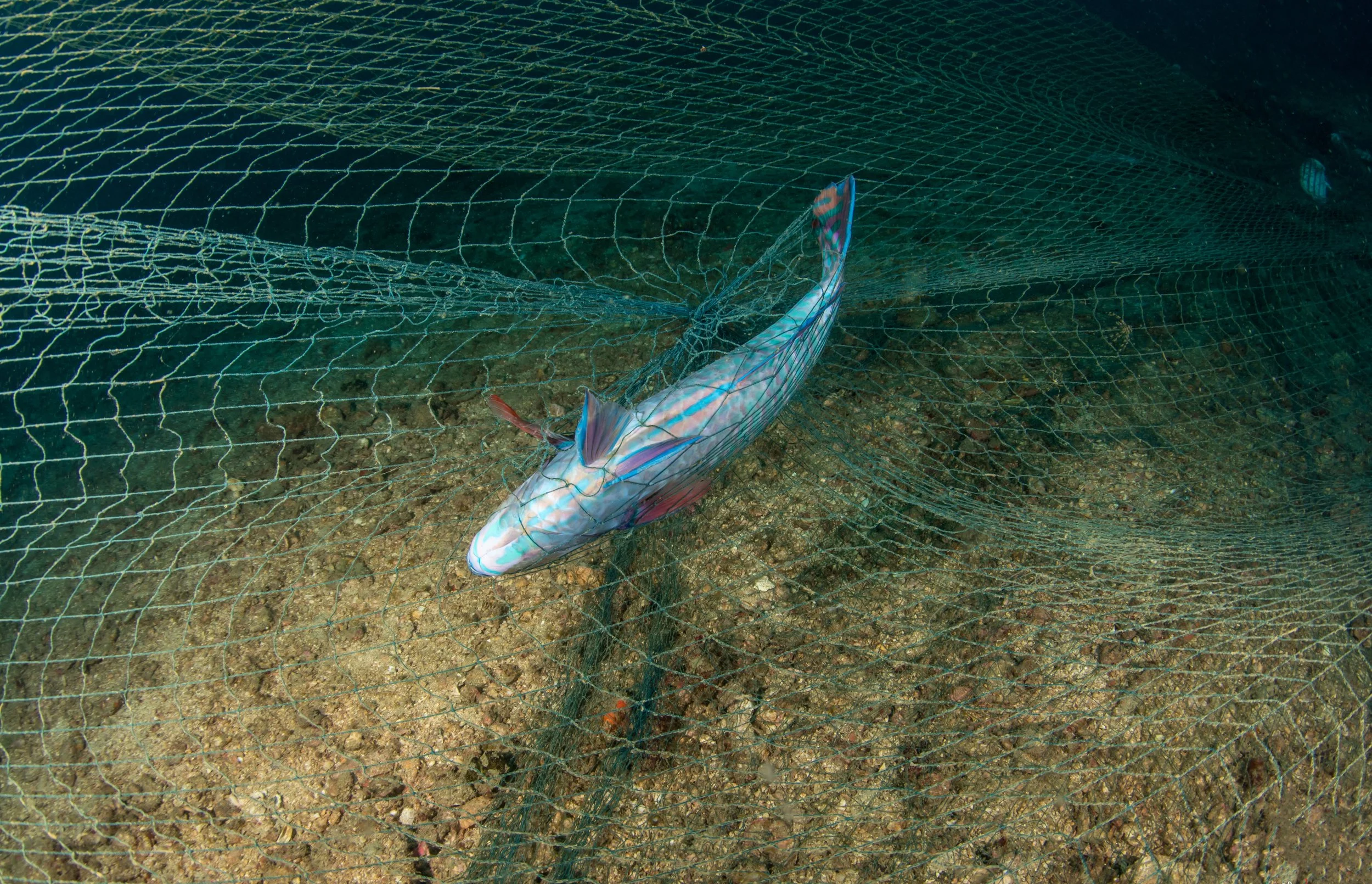
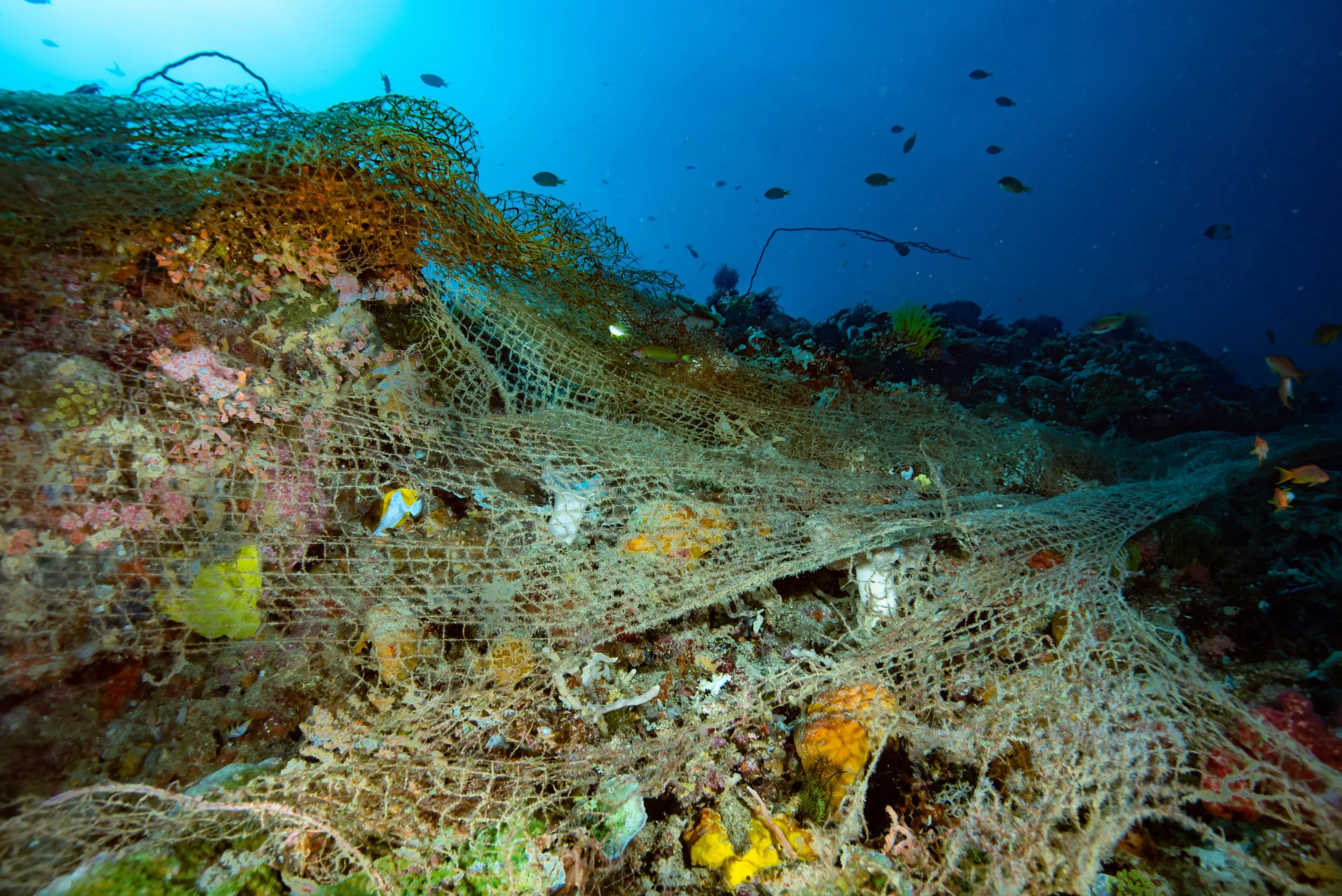
We found 23 papers outlining habitat and animal impacts of ALDFG globally, further underscoring ALDFG as one of the most harmful forms of aquatic plastic pollution. Two papers reviewed impacts of ALDFG on the global marine environment (e.g. biodiversity loss, habitat destruction, economic losses etc.) in addition to summarizing current efforts to reduce these impacts (e.g. reporting, retrieval, policy interventions, sustainable fishing practices etc.) (1, 2). Four papers focused on coral reef habitats, three of which assessed coral mortality, entanglement, and smothering due to ALDFG (3–5) in the Indian Ocean. A case study off the coast of Italy proposed a new protocol to assess the effect of ALDFG removal on coral reef habitats6, offering a new tool for environmental managers to determine if ALDFG removal will benefit a coral reef ecosystem. One study in Saudi Arabia found that fishing related litter made up most of the sea-based litter found in mangrove ecosystems, with 15.37% and 33.2% found on the mangrove floor and canopy respectively (7). Additionally, vegetation from coastal sand dunes were found to naturally trap microplastic litter, including fishing rope fragments (13% of the total litter found), along the Central West Indian coast (8). ALDFG also effects microbial communities by providing them with new surfaces on which to build biofilms (9) and reducing the decomposition of seaweeds10, which could have wider ecosystem implications.
Thirteen papers in this review covered animal impacts of ALDFG, including six focused on reptiles (11–16), two on invertebrates (17,18), one on marine mammals (19), and four on multiple species (20–24). Impacts included entanglements in nets, lines, and ropes (11–15,19,20,22), the leaching of hazardous plasticizers by soft plastic fishing lures (17), ghost fishing via nets (monofilament, multifilament, gillnets, trammel nets), and traps and pots (18,21,23,24), and polluting key nesting habitats16. Entanglement risk can increase when animal habitat overlaps with human usage (e.g. boat harbors, fishing areas, shipping lanes etc.) (13, 22), storm seasons (14), and areas of high pollution (15). Scientists are researching ways to determine if fisheries management actions are effective in reducing entanglements of highly endangered species (19) and assessing whether entanglements may be from ALDFG or operational fishing gears (20). One study in the Gulf of St. Lawrence found that entanglement risk of North Atlantic right whales in the region decreased by approximately 62% between 2018 and 2021 following commercial snow crab fishery closures (19). Additionally, another study in the northeast Atlantic created a quantitative, standardized multi-criteria decision analysis method to determine whether entanglements were caused by active fishing gear or ALDFG and found 57% of the cases tested were from ALDFG (20).
Quantifying Gear Loss
Quantifying the amount of fishing gear lost regionally helps prioritize areas for removals and create effective management strategies. Five papers covered this topic in 2025, and research was mainly based in Europe (25–27) and Asia (28,29). Studies estimated between 11.5 and 70 tonnes of commercial snow crab traps lost in the Barents Sea over a three-year period (25), approximately 2,762 netting sheets and 1,379 traps lost in the Baltic Sea (26), and over half of all marine litter being from trawl fisheries in the United Kingdom (27). In Asia, studies found that ALDFG made up almost half of beach litter found in 52 coastal villages in Nadu, India and over 64,272 traps are lost annually on Seribu Island, Indonesia, coasting approximately $195,082 USD to replace (28,29).
Mapping
Understanding where ALDFG occurs regionally is important in deciding where to target removals and management actions. Two studies in this review proposed mapping methods in Europe (30) and Canada (31). Morfin et al. presented their Fish&Click program, which allowed citizen scientists to record their ALDFG sightings in the Bay of Biscay, the Celtic Sea, and the English Channel onto a mobile app or website (2025). Along Canada’s Pacific coast, Frenkel et al. used a species distribution modelling approach to determine important variables in predicting commercial fishing gear loss and identify areas likely to contain ALDFG (2025).
Removal
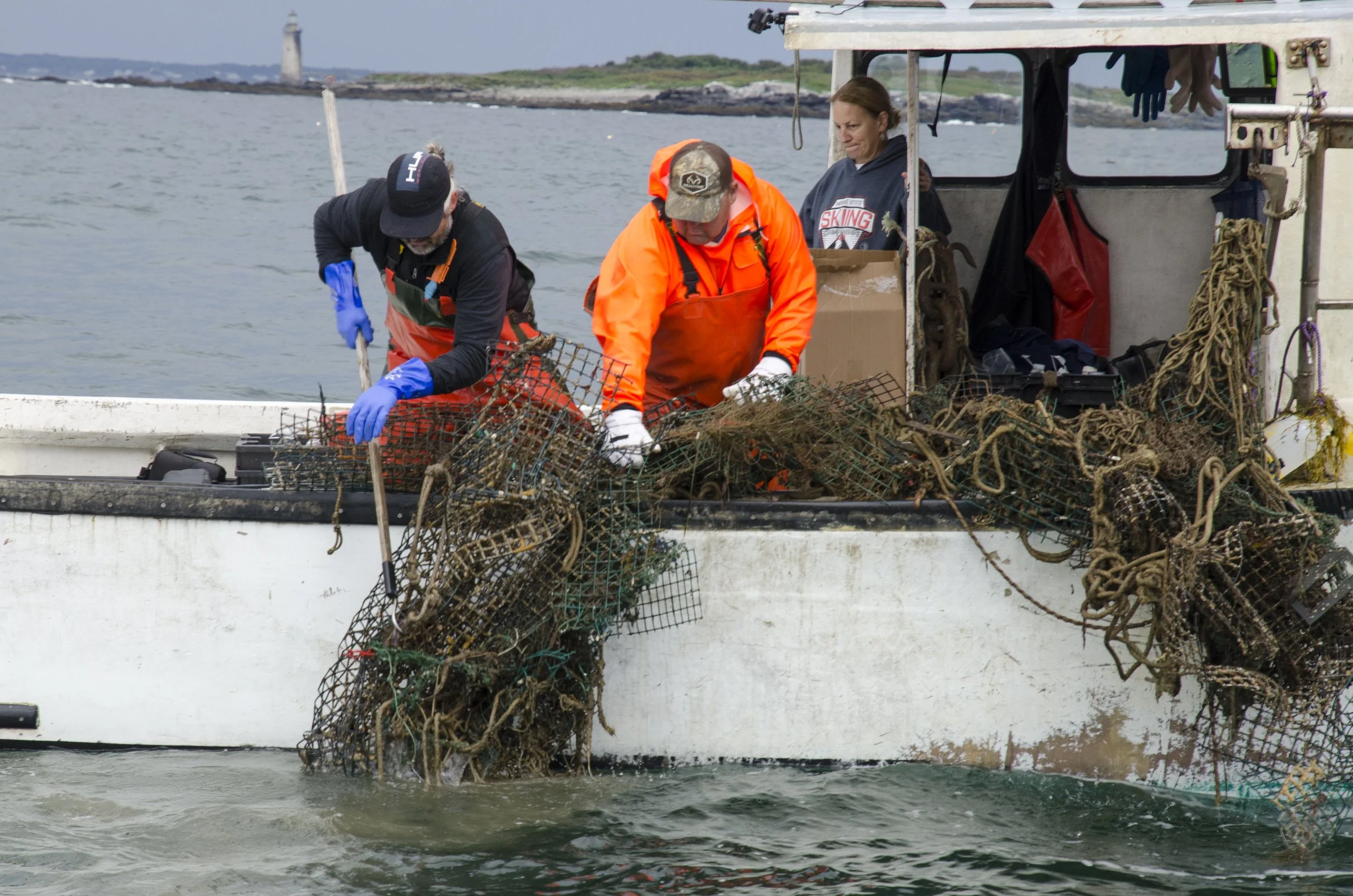
Removing ALDFG is an effective way to reduce harm to aquatic life. Five resources from around the world covered this topic (32–36). Fishing community engagement is an important first step in any removal project, as local fishers will understand where and what kind of ALDFG is accumulating, in addition to its environmental and economic impacts (35,36). Different methods are appropriate for removing ALDFG from different environments. A study based on the southwest coast of India found that scuba was the most effective method in areas with clear, shallow waters, while bottom trawling was more effective in deeper waters where commercial trawling typically occurs (33). ALDFG can also be removed from beaches that are near fishing and aquaculture activities, and a study based in Taiwan found that 25% of debris removed from beaches were fishing gear related (34) (Wei-Yu et al). ALDFG and other fishing related litter can be challenging to identify, so researchers created a photo ID guide based on examples from the UK that can be used in marine litter monitoring and research programs (37).
Plastics
We found 13 papers discussing different topics regarding fishing gear plastics, including microplastics (38–40), the circular economy (41–44), and subsequent waste management (45–50).
The papers in this review helped fill knowledge gaps regarding if plastic fishing (and aquaculture) gear can release microplastics (39,40) and their impacts on the marine environment (38). Plastic fishing nets were found to release microplastics in lab studies, however, it is difficult to determine their impact in real-world environments that may have other contaminants, including existing microplastics (39). Researchers have found that the amount of microplastics released from aquaculture nets and ropes depends on the complex interactions between the material types, their age, coatings, and cleaning methods (40). Microplastics can impact marine life in a variety of ways, including intestinal tract blockage, inflammation, hormone disruption, reproductive effects, and many others (40). A recent review suggested the following recommendations to reduce microplastics from ALDFG and other marine plastics: creating domestic solutions for managing plastic waste, recycling plastic waste from industries, substituting biodegradable materials where possible, and continuously sharing knowledge regarding the best technology and techniques available to manage plastic pollution (40).
The circular economy presents local and global opportunities for communities to reduce the impacts of ALDFG while creating economic benefits and opportunities for themselves. Four studies in Europe (41,43), North America (42), and Asia (44) included in this review outline examples of circular economy initiatives, including their successes and challenges. Generally, best practices for these initiatives included stakeholder collaboration, market incentives, and supportive government policies (41). Some challenges include the economic viability of the products, contamination of the materials, scaling these initiatives, and regulatory hurdles (41). Some regions in these studies, such as Nordic countries and Hawaii, would both benefit from increasing their local recycling capacity while promoting fishing practices that reduce the chances of gear loss (42,43). Balancing immediate regulations that provide short term benefits to the recycling industry, such as incineration taxes implemented in Taiwan, with long-term industrial changes, such as product innovation, can help reduce fishing gear waste and maximize environmental and economic benefits in a region (44).
More research is addressing fishing gear waste management, which is important for managing fishing gear. While fishers try to reuse and mend their fishing gear where possible, a study in the Gulf of Guinea found that 92% of fishers surveyed were unaware of the environmental harms of improper gear disposal, leading to 18% of it being burned and 16% being dumped (48). This underscores the importance of ensuring fishers have access to environmental education resources and proper disposal facilities for their EOLFG. ALDFG and EOLFG present unique opportunities for countries globally to participate in the circular economy, where materials are destined for re-use into new products rather than being disposed of. Fishing gear may contain commercially valuable materials, such as polyamide that can be recycled into precursor materials that produce Nylon 6 (a material that can be used to produce clothing and other products) with relative efficiency (64 – 86% yield) when compared to traditional methods (66 – 98% yield) (45). Breaking down fishing gear into materials that can be used in recycled products is challenging, as the plastics in fishing gear are often degraded and require intensive cleaning. However, researchers are finding ways to increase the recyclability of fishing gear regardless of its condition. Some have proposed a new method of recycling polypropylene from weathered ghost nets with mostly water purification and have found the recycled materials’ properties to be like that of pristine polypropylene (47). Additionally, researchers in Vietnam found that washing end-of-life fishing ropes significantly reduces surface impurities while maintaining the mechanical strength, allowing for up to 25% of these materials to be recycled and integrated into new fishing ropes (50). Despite these challenges, recycling fishing gear waste can significantly reduce environmental impacts and economic costs (46). A study in Latvia estimated that recycling fishing nets to produce nylon avoids the production of 7,850 kg of CO2 eq. per tonne of discarded fishing nets and reduces costs by 2,947 Euro per tonne, while using the recycled materials in asphalt reinforcement avoids the production of 636 kg of CO2 per tonne and reduces costs by 407 Euro per tonne (46). However, many countries require infrastructure and policy changes to enhance their participation in the circular economy. For example, a report from Europe highlighted various strategic improvements for the collection, transport, sorting, pre-treatment, and treatment stages of fishing gear waste (49).
Biodegradable Fishing Gear
Researchers are exploring biodegradable alternatives to plastic fishing gear (51–56), while working to understand fishers’ perceptions and uptake of this new gear (57,58). We included eight papers on biodegradable fishing gear in this review.
Fishers may be hesitant to adopt biodegradable fishing gear if they are worried about its performance and reduced catch efficiency compared to plastic fishing gear (57,58). Fishers surveyed in Norway indicated that they were more likely to use biodegradable alternatives if there were economic incentives, if they saw their peers making the transition, or if the catch efficiency was like plastic fishing gear (57,58).
Researchers are comparing the performance of biodegradable alternatives to plastic fishing gear via lab experiments and modelling. They are generally finding similar performances between nylon gillnets (51), polyamide gillnets (52) and fibers (56), and high-density polyethylene twine for trawl nets (53). One study found that while biodegradable monofilaments (e.g. co-polyester) degraded faster than polyamide, their service time was longer than expected (e.g. it would take 10 – 20 years for biodegradable monofilaments to lose 50% of their strength in 2 °C) (54). While most research on this topic has been done in lab studies, a field study in Sardinia found that pot nets lined with biodegradable materials were a viable alternative to plastic pot nets (55). However, more field testing is needed to ensure the performance of biodegradable alternatives are comparable to plastic fishing gear.
Fishing Aggregating Devices
We found five papers addressing both aFADs (59–61) and two addressing dFADs (62,63). Both FADs require different management strategies due to their differences in mobility. Anchored FADs are common amongst many fisheries globally, including the Mediterranean Sea (60,61) and the Caribbean (59). A systematic review of the Mediterranean Sea estimates that 60,000 aFADs have been deployed per year over the last three decades, with most never being recovered (60). Based on the review results, researchers recommended fishers and management to reduce the number of aFADs deployment at sea and the number allotted to each vessel, while exploring biodegradable materials (60). One case study focused on the Western Mediterranean Sea recorded 1,739 aFADs during their survey period (2017 – 2022) and estimated that these aFADs affected a 25,599 km2 area which was over 3.5x larger than previously reported (61). The FAO developed the Caribbean Regional Management plan to help address the aFAD fishery and its impacts in the Caribbean region, while improving the livelihoods of those who rely on the fishery (59). This report acknowledges that aFADs are likely a significant source of marine litter, and that it will be challenging to develop affordable designs that reduce their likelihood of littering the region (59).
Drifting FADs have the potential to impact larger areas of the ocean, due to their mobile nature. The first assessment of dFAD disposal and beaching patterns was completed for the Gulf of Guinea and found that the highest dFAD beaching rates were in the northeast, likely due to local currents, and are threatening key fish spawning habitats (62). Globally, researchers estimated that 1.41 million dFAD buoys were released between 2007 and 2021, drifting across approximately 134 million km2, or 37% of the ocean’s surface (63). These dFADs contribute to coastal pollution and impact important marine habitats, having been stranded in 104 maritime jurisdictions globally (63).
Recreational Fisheries
ALDFG from recreational fisheries is an understudied topically globally for both marine and freshwater ecosystems. Three papers in this review cover the topic in Argentina, the United States, and Hungary (64–66). Like commercial and artisanal fishing communities, it is also important to engage with recreational fishing communities to understand ALDFG issues. In Argentina, researchers engaged with recreational fishers in south-eastern Buenos Aires to collect nearly 200 fishing hooks and determine their origins and uses (64). Researchers used questionnaires to understand local anglers’ perceptions on pelicans and their entanglement risk on popular fishing piers in Tampa Bay, Florida and found that the highest risk of pelican entanglements occurred at peak times of angler locations (65). In Hungary, recreational fishers reported estimates of their gear loss via an online survey, which amounted to roughly 126 to 196.2 million fishing gear items have been lost in Hungary’s freshwater ecosystems over the last 18 years (66). If current trends persist, researchers estimate that 301 – 468.7 million pieces of fishing gear could become lost in Hungary over the next 25 years (66).
Social and Economic Dimensions of ALDFG
The social and economic dimensions of ALDFG are studied less than other aspects of ALDFG discussed above. Six documents in this review discussed these dimensions globally (67), and on regional levels in Asia (68), Africa (69), Europe (70), and in North America (71,72). Researchers addressed the knowledge gap of the impact of marine litter, including ALDFG, on small scale fisheries through a systematic analysis (67). They found that while the research often portrays fishers as a source of marine litter, it rarely focuses on how fishers are impacted by the litter and other environmental challenges, especially on small and artisanal scales (67). Socio-economic factors can also contribute to gear loss. A study in India found that fishers were more likely to lose or dispose of inexpensive fishing gear, such as cheaply made gillnets as their low quality and cost allow fishers to obtain replacements easily (68). However, discarding fishing gear can also lead to economic losses for the fisheries sector. A study in the Northeastern Mediterranean Sea estimated that 565 kg of recovered derelict fishing nets cost local fisheries roughly $18,510 during the year-long study period (70).
Studies in Mexico found that while many community members may consider ALDFG and ghost fishing a problem (72), the lack of adequate policies and infrastructure make managing the problem challenging (71). One study applied their ‘One Health’ approach to African small island developing states (SIDs) to find holistic ways to address social, economic, and environmental issues caused by marine pollution (including ALDFG) (69). They recommended that countries should focus on strengthening their legal frameworks, promoting environmental stewardship and waste management, enhancing regulation enforcement, and fostering stakeholder engagement and integrating traditional knowledge practices to reduces these impacts (69). A large review of 152 studies published between 2000 and 2024 highlighted that key factors for ALDFG accumulation included fishing industry expansion, economic constraints, and regulatory gaps, and that impacts included socio-economic losses for fishers and coastal populations (in addition to environmental impacts) (73). These studies all highlight the need for holistic approaches to managing ALDFG to reduce its socio-economic impacts.
Policy and Management
Policies and management actions on international and regional scales are crucial to the prevention, mitigation, and remediation of ALDFG in aquatic environments. Nine papers in this review covered ALDFG policy globally (2) and regionally in Europe (74,75), Asia (76), Africa (77,78), and in the Pacific Ocean (79–81). In Europe, researchers examined how various tiers of international law can work together to address marine plastic pollution (including ALDFG) from vessels in the Arctic. Some countries are lacking developed policies and infrastructure to address the transboundary nature of ALDFG holistically (77,78). However, these gaps do present opportunities for countries to strengthen their policy, legal, and regulatory frameworks and create innovative solutions for regionally coordinated responses (77,78).
Having strong policies allows environmental mangers to act on ALDFG In their regions. A study in Taiwan found that 85.8% of gillnet fishers surveyed supported stronger financial incentives to recycle ALDFG (76). Additionally, researchers in the Eastern Mediterranean developed a Gear Removal Index tool to assist managers in deciding which ALDFG were able to be removed without further harming the environment (75). However, some management actions, such as fishing bans, can be controversial in their effectiveness and overall impact on fishing communities (79–81). This further emphasizes the need for stakeholder and community engagement to ensure policies and management actions are effective in addressing ALDFG and accepted among communities.
End Notes
Pandey, A. et al. Ghost Fishing Gear: An Overlooked Threat in Marine Debris Management.
Wasave, S. et al. A bibliometric review on ghost fishing: Impacts on marine environment and governing measures. Marine Pollution Bulletin212, 117604 (2025).
Sadhukhan, K., Shunmuagaraj, T., Shekar, R., Marigoudar, S. R. & Ramana Murthy, M. V. Ghost Fishing Gear: A Multifaceted Risk to the Coral Reefs Along India’s Southeast Coast. Natl. Acad. Sci. Lett. https://doi.org/10.1007/s40009-025-01685-4 (2025) doi:10.1007/s40009-025-01685-4.
Shankar, V. S., De, K., Jacob, S. & Satyakeerthy, T. R. Unveiling the risk of marine litter and derelict fishing gear in remote coral reefs of the Andaman and Nicobar Islands, North Indian Ocean. Marine Pollution Bulletin212, 117591 (2025).
Salomidi, M. et al. Advancing knowledge on red coral Corallium rubrum (Linnaeus, 1758) populations and associated mesophotic communities in the Aegean Sea, Eastern Mediterranean. Mediterr. Mar. Sci.26, 378–392 (2025).
Azzola, A. et al. Assessing the Hidden Threat of Removing Abandoned Fishing Gear from Coralligenous Habitats: A New Monitoring Protocol. Preprint at https://doi.org/10.2139/ssrn.5152808 (2025).
Neelavannan, K. et al. Geospatial distribution and anthropogenic litter impact on coastal mangrove ecosystems from the Saudi Arabia coast of the Gulf. Sci Rep15, 15964 (2025).
De, K., Maiti, B. & Sautya, S. Retention of marine litter by coastal sand dune vegetation along the Central West Indian coast: assessment of composition, origin, and implications for management. Hydrobiologia https://doi.org/10.1007/s10750-025-06066-y (2025) doi:10.1007/s10750-025-06066-y.
Perdigão, R. et al. Microbial communities associated with plastic fishing nets: diversity, potentially pathogenic and hydrocarbon degrading bacteria. Sci Rep15, (2025).
Litchfield, S. G. & Kelaher, B. P. Soft plastic fishing lures and fishing nets significantly influence the decomposition of Ecklonia radiata. Marine Pollution Bulletin211, 117445 (2025).
Das, P. et al. First report on the entanglement of Yellow Sea Snake Hydrophis spiralis (Shaw, 1802) in plastic debris in the Northwestern Bay of Bengal. Oceanologia67, (2025).
Abid P.M., Z., Utthamapandian, U., Vishnu, C. B., Anto, A. & Kumar, R. Rescue of two sea turtles from abandoned, lost, or otherwise discarded fishing gear during survey of the southeast coast of India. Indian Ocean Turtle Newsletter (2025).
Høiberg, M. A. et al. Marine debris impacts on Hawaiian green sea turtles (Chelonia mydas): High prevalence of hook-and-line fishing gear in strandings. Marine Pollution Bulletin215, 117869 (2025).
Polyak, M. M. R. et al. Buoyancy Syndrome and Entanglement Disorders in Sea Turtles of the Indian Ocean: Risk Factors and Outcomes. Preprint at https://doi.org/10.20944/preprints202505.0198.v1 (2025).
Panda, P. et al. Evaluating the ecological risks of marine litter and derelict fishing nets on Olive Ridley hatchlings: Insights from a globally renowned rookery along the east coast of India. Marine Pollution Bulletin222, 118673 (2025).
Maneja, R. H. et al. Spatial patterns of marine litter on the Arabian Gulf’s major offshore sea turtle nesting islands. Discov Oceans2, 69 (2025).
Beggel, S., Kalis, E., Gilb, K., Pander, J. & Geist, J. Ecotoxicological effects of soft plastic fishing lures on the benthic amphipod Hyalella azteca. Heliyon11, e43068 (2025).
Villemarette, E. C. Ghost Fishing Due to Derelict Crab Traps in Louisiana’s Barataria Basin. (Louisiana State University and Agricultural and Mechanical College, 2025).
Cole, A. K. & Brillant, S. W. Quantifying entanglement risk reduction to North Atlantic right whales from time-area closures in the southern Gulf of St. Lawrence snow crab fisheries. Endang. Species. Res.57, 143–159 (2025).
Rodríguez, Y., Vandeperre, F., Duncan, E. M., Machete, M. & Pham, C. K. An index to differentiate megafauna entangled in operational fishing gears from abandoned, lost, or otherwise discarded fishing gears. Science of The Total Environment971, 178950 (2025).
Şen, Y. & Özekinci, U. Controlled Ghost Fishing: Effects of Soaking Times and Mesh Sizes on Catchability in Trammel Net Fisheries. Fisheries Management Eco e12811 (2025) doi:10.1111/fme.12811.
Zhang, Z. et al. Ecological risk assessment of marine plastic pollution. Nat Sustain https://doi.org/10.1038/s41893-025-01620-x (2025) doi:10.1038/s41893-025-01620-x.
Vodopia, D., Verones, F., Askham, C. & Larson. Ghost fishing catch estimates based on annual retrieval operations in Norwegian waters. Fisheries Research292, (2025).
Korkut, S. O., Cilbiz, M. & Çapkın, K. Factors influence on the catch efficiency of abandoned, lost or otherwise discarded fishing gears (ALDFG): a case from Turkish inland fisheries. Hydrobiologia https://doi.org/10.1007/s10750-025-05918-x (2025) doi:10.1007/s10750-025-05918-x.
Cerbule, K., Herrmann, B., Larsen, R. B. & Yu, M. Ghost fishing by self-baited lost, abandoned or discarded pots in snow crab (Chionoecetes opilio) fishery. Journal for Nature Conservation82, 126764 (2024).
Rijkure, A., Cerbule, K. & Megnis, J. Abandoned, lost, or otherwise discarded fishing gear in coastal fisheries: A case study in the Baltic Sea coastal waters of Latvia. Marine Policy165, 106187 (2024).
Russell, G. The Properties of Glass Fiber Reinforced Polypropylene Filaments Recycled from Fishing Gear. Preprint at http://arxiv.org/abs/2409.09445 (2024).
Edward, J. K. P. et al. Assessment of beach litter, including Abandoned, Lost, or Discarded Fishing Gear (ALDFG), along the coast of Tamil Nadu, India: Magnitude, sources, composition, pollution status, and management strategies. Marine Pollution Bulletin213, 117700 (2025).
Riyanto, M., Wahju, R. I. & Komarudin, G. S. Rate and causes of lost gillnets in the Pangandaran Waters of Indonesia. IOP Conf. Ser.: Earth Environ. Sci.1033, 012040 (2022).
Morfin, M., Méhault, S., Miquerol, L. & Dufau, Q. C. Using citizen science to inventory and map abandoned, lost, or otherwise discarded fishing gear (ALDFG). Marine Pollution Bulletin220, (2025).
Frenkel, C. M. Commercial fishing gear loss in Canada’s Pacific Ocean: answering the why, where, and how with a mixed methods, transdisciplinary approach. (University of Victoria, 2023).
Russell, J. et al. Is there something fishy about that litter? A UK case study on abandoned, lost or otherwise discarded fishing gear. Marine Pollution Bulletin217, 118054 (2025).
Krishnankutty, H., Mandhir, S. K., Ghosh, A. K. A., Antony, M. B. K. & Thomas, S. N. Retrieval of abandoned, lost, or otherwise discarded fishing gear through different retrieval modes and analysis of biota on the retrieved gear. Environ Sci Pollut Res32, 9528–9540 (2025).
Wei-Yu, L. et al. Derelict fishing gear in relation to the characteristics of coastal fisheries in Taiwan.
Thi Khanh Ngoc, Q. et al. Vietnamese fishers’ perceptions on the effects of abandoned, lost, and discarded fishing gear and their willingness to participate in retrieval efforts. Marine Policy179, 106765 (2025).
Pye, C. Investigating the Presence of Abandoned, Lost, and Discarded Fishing Gear (ALDFG) to Protect Golden Cod in the Gilbert Bay MPA. (Memorial University of Newfoundland, 2025).
Russell, J. et al.Photo Guide to Aid the Identification of Fisheries Related Litter Including ALDFG. 24 (2025).
Islam, F. A. S. The Effects of Plastic and Microplastic Waste on the Marine Environment and the Ocean. EJGEO6, 1–9 (2025).
Ramos, S. et al. An Integrated Approach to Assessing the Potential of Plastic Fishing Gear to Release Microplastics. Water17, 1439 (2025).
Booth, A. M. et al.SMARTER - Surveying Microplastic Release from Aquaculture Nets and Ropes Using Different Technologies for Emission. 46 https://www.oceanspacemedia.com/files/2025/09/15/sluttrapport%20smarter%20%20surveying%20microplastic%20release%20from%20aquaculture%20nets%20and%20ropes%20using%20different%20technologies%20for%20emission%20reduction.pdf (2025).
Lopez-Merino, P., Charlier, C. & Guerci, E. State-of-the-Art Review on Circular Economy Models for Plastic Waste. https://shs.hal.science/halshs-05216365/document (2025).
Ayassamy, P. A Review of Hawaii and Plastic Pollution: Potential Innovations within Circular Economy? Environmental Management https://doi.org/10.1007/s00267-025-02134-0 (2025) doi:10.1007/s00267-025-02134-0.
Einarsson, H. A., Jeremiassen, A., Gaardlykke, M., Haney, G. & Langedal, G. The Circular Economy of Fishing Gear in Nordic Fisheries - The Situation and Challenges. 32 http://dx.doi.org/10.6027/temanord2025-544 (2025).
Li, P.-C., Tsao, F.-W., Shih, H.-C., Ma, H. & Hou, N.-H. Unlocking the economic potential of recycling waste fishing nets for textile reproduction. Ecological Economics239, 108752 (2026).
Atong, D., Soongprasit, K., Sricharoenchaikul, V. & Hawangchu, Y. Thermal conversion of non-recyclable discarded fishing nets from the Gulf of Thailand for marketable resource recovery. Process Safety and Environmental Protection198, 107228 (2025).
Zlaugotne, B., Pubule, J. & Gusca, J. Fishing net waste management: quantification and valorization. Front. Mar. Sci.12, 1607436 (2025).
Dąbrowska, A., Szymiczek, M., Świątek, O., Chomiak, M. & Chmielnicki, B. The mitigation of the ghost nets threat by recycling of polypropylene: Blends, their ageing tests and spectral characterization. Cleaner Water4, 100126 (2025).
Ekperusi, A. O., Michael, A. & Marcus, G. C. Assessing fishing gear disposal practices in coastal communities from the Gulf of Guinea and the implications on the sustainability of the blue economy. npj Ocean Sustain4, 49 (2025).
Domech, P. C., Clifford, E. & Wan, A. H. L. D.2.1.1 Analysis of Gaps and Possibilities of Current End- of-Life Fishing Gear Disposal Systems. https://www.universityofgalway.ie/media/researchcentres/serg/files/circnets_report_d211.pdf.
Potempa, T. et al. Increasing the recycling rates of post-use fishing ropes: the role of cleaning processes and the possibilities of a systematic Individual-Producer-Responsibility implementation. Environmental Challenges21, 101314 (2025).
Cerbule, K., Larsen, R. B., Vollstad, J. & Alvestad, A. H. Comparison of fishing performance of biodegradable and nylon gillnets with different twine diameter. Regional Studies in Marine Science87, 104247 (2025).
Karl, C. W. et al. Degradation Behavior of Biodegradable and Conventional Polymers for Gill Nets, Exposed to Accelerated Aging. ACS Appl. Polym. Mater.7, 2830–2840 (2025).
Le Gué, L., Arhant, M., Davies, P., Vincent, B. & Tanguy, E. Biodegradable twine for trawl fishing: Seawater ageing and net modelling. Marine Pollution Bulletin211, 117433 (2025).
Wataniyakun, W., Le Gall, M., El Rakwe, M., Karl, C. W. & Larsen, R. B. Biodegradable fishing gears: A potential solution to ghost fishing and marine plastic pollution. Marine Pollution Bulletin212, 117607 (2025).
Monfardini, E. et al. A field-based framework for evaluating sustainable fishing gear in small-scale Plesionika edwardsii fisheries. Front. Mar. Sci.12, 1656784 (2025).
An, Y. et al. Marine-Biodegradable Polyamide 4/6 Copolymer Fibers. ACS Appl. Polym. Mater. acsapm.5c03402 (2025) doi:10.1021/acsapm.5c03402.
Do, H.-L. & Armstrong, C. W. Navigating transition: understanding fishers’ perceptions of biodegradable fishing gear adoption. Journal of Environmental Economics and Policy 1–18 (2025) doi:10.1080/21606544.2025.2471112.
Do, H.-L. & Cherry, T. L. Ghost fishing and the voluntary adoption of biodegradable gear. Resource and Energy Economics 101534 (2025) doi:10.1016/j.reseneeco.2025.101534.
Valles, H. & Varsamos, S. The Caribbean Regional Management Plan for the anchored fish aggregating device fishery. (2025) doi:10.4060/cd3830en.
Sinopoli, M. A systematic review of the impact of fish aggregating devices (FADs) in the Mediterranean Sea: Knowledge gaps and potential mitigation measures. Ocean & Coastal Management269, 107788 (2025).
Sechi, A. D. et al. Anchored Fish Aggregating Devices (FADs) are overlooked and growing source of pollution in Western Mediterranean Sea. Marine Pollution Bulletin219, 118305 (2025).
Amemou, H., Beugre, Y. & Kouamé, D. Dispersal and Beaching Patterns of Drifting Fish Aggregating Devices (dFADs) as Marine Litter in the Northern of Gulf of Guinea. OJMS15, 115–128 (2025).
Schiller, L., D’Costa, N. G. & Worm, B. The global footprint of drifting fish aggregating devices. Science AdvAnceS https://doi.org/10.1126/sciadv.ads2902 (2025) doi:10.1126/sciadv.ads2902.
Seco Pon, J. P., Zumpano, F., Hernandez, M. M., Favero, M. & García, G. O. An Approach Investigating the Origins of Derelict Fishhooks in A Recreational Coastal Argentinean Angling Setting. Oceanography & Fisheries Open Access Journal18, 18 (2025).
Simmons, B. A. Angler perceptions of pelican entanglement reveal opportunities for seabird conservation on fishing piers in Tampa Bay. PLoS ONE20, e0320424 (2025).
Löki, V. et al. Long‐term perceptions of freshwater anglers about abandoned, lost or discarded fishing gear during their fishing careers. Ecol Sol and Evidence6, e70123 (2025).
Guerrato, N. R. & Gonçalves, L. R. Netting the problem: a comprehensive analysis of marine litter on artisanal fishers. Front. Ocean Sustain.2, (2025).
Viswambharan, D., Sreenath, K. R. & Padinjakara, G. G. Ecosystem Interactions and Socio-Economic Drivers of Derelict Fishing Gear in the Laccadive Sea. Regional Studies in Marine Science 103998 (2024) doi:10.1016/j.rsma.2024.103998.
Maes, T. & Messing, D. Food for thought: Marine pollution’s impact on One Health and food security in African SIDS. Regional Studies in Marine Science85, 104136 (2025).
Mazlum, Y. et al. Economic Assessment of Removal of Abandoned, Lost, or Otherwise Discarded Fishing Gear (ALDFG) From Northeastern Mediterranean Sea. Acta Nat. Sci. 173–186 (2025) doi:10.61326/actanatsci.v6i2.427.
Smy, O. The Plasticene Ocean: the dynamic human dimensions of marine plastic pollution and ‘ghost gear’ in Baja California Sur, Mexico. (University of British Columbia, 2025).
Miranda-Peralta, D. G., Ríos-González, K. G., Marín-Perkins, E. J. & López-Olvera, I. Is ghost fishing in Banderas Bay, Mexico, a problem? (Perception, causes, consequences, and knowledge). Lat. Am. J. Aquat. Res.53, 671–687 (2025).
Odhiambo, L., Kawaka, F. & Sande, J. Ghost gear crisis: the threat of ‘abandoned, lost or otherwise discarded fishing gear’ (ALDFG). African Journal of Marine Science47, 243–255 (2025).
Tanaka, Y. Prevention of Vessel-Source Plastic Pollution from Arctic Shipping: Some Thoughts on Normative Interactions between Treaties. Int. J. Mar. Coast. Law 1–38 (2025) doi:10.1163/15718085-bja10238.
Jimenez, C. & Resaikos, V. Chasing Ghosts: Evidence-Based Management of Abandoned Fishing Gear in the Eastern Mediterranean. JMSE13, 1574 (2025).
Hsiao, Y.-J. & Chen, J.-L. The effectiveness of management strategies in reducing ALDFG, improving fisher compliance, and mitigating marine pollution in coastal regions in Taiwan. Marine Pollution Bulletin221, 118493 (2025).
Ssempijja, D., Einarsson, H. A., Kubiriza, G. K., Lugumira, J. S. & He, P. An assessment of legislative, regulatory and policy gaps in the management of abandoned, lost, and otherwise discarded fishing gear in Lake Victoria, East Africa. Environmental Development56, 101249 (2025).
Brown, N. Chapter 8: Best Practice and Lessons Learned from Large-Scale Restoration Projects. Technical Papers Compendium G20 Environment and Climate Sustainability Working Group - Oct 2025. https://www.researchgate.net/profile/Nick-Brown-4/publication/396448375_Chapter_8_Best_practice_and_lessons_learned_from_large-scale_restoration_projects_Technical_Papers_Compendium_G20_Environment_and_Climate_Sustainability_Working_Group_-_Oct_2025/links/68ecc917f3032e2b4be889d9/Chapter-8-Best-practice-and-lessons-learned-from-large-scale-restoration-projects-Technical-Papers-Compendium-G20-Environment-and-Climate-Sustainability-Working-Group-Oct-2025.pdf#page=461 (2025).
Castrejón, M. & Defeo, O. Addressing illegal longlining and ghost fishing in the Galapagos marine reserve: an overview of challenges and potential solutions. Front. Mar. Sci.11, 1400737 (2024).
Hearn, A. R. & Bucaram, S. Commentary: Addressing illegal longlining and ghost fishing in the Galapagos marine reserve: an overview of challenges and potential solutions. Front. Mar. Sci.12, 1484989 (2025).
Castrejón, M. & Defeo, O. Commentary: Addressing illegal longlining and ghost fishing in the Galapagos Marine Reserve—a response to Hearn and Bucaram (2025). Front. Mar. Sci.12, 1576990 (2025).