|
It is with heavy hearts that we would like to honor the passing of our dear colleague and friend, Rich Lincoln, founder of GGGI member organization Ocean Outcomes… ͏ ͏ ͏ ͏ ͏ ͏ ͏ ͏ ͏ ͏ ͏ ͏ ͏ ͏ ͏ ͏ ͏ ͏ ͏ ͏ ͏ ͏ ͏ ͏ ͏ ͏ ͏ ͏ ͏ ͏ ͏ ͏ ͏ ͏ ͏ ͏ ͏ ͏ ͏ ͏ ͏ ͏ ͏ ͏ ͏ ͏ ͏ ͏ ͏ ͏ ͏ ͏ ͏ ͏ ͏ ͏ ͏ ͏ ͏ ͏ ͏ ͏ ͏ ͏ ͏ ͏ ͏ ͏ ͏ ͏ ͏ ͏ ͏ ͏ ͏ ͏ ͏ ͏ ͏ ͏ ͏ ͏ ͏ ͏ ͏ ͏ ͏ ͏ ͏ ͏ ͏ ͏ ͏ ͏ ͏ ͏ ͏ ͏ ͏ ͏ ͏ ͏ ͏ ͏ ͏ ͏ ͏ ͏ ͏ ͏ ͏ ͏ ͏ ͏ ͏ ͏ ͏ ͏ ͏ ͏ ͏ ͏ ͏ ͏ ͏ ͏ ͏ ͏ ͏ ͏ ͏ ͏ ͏ ͏ ͏ ͏ ͏ ͏ ͏ ͏ ͏ ͏ ͏ ͏ ͏ ͏ ͏ ͏ ͏ ͏ ͏ ͏ ͏ ͏ ͏ ͏ ͏ ͏ ͏ ͏ ͏ ͏ ͏ ͏ ͏ ͏ ͏ ͏ ͏ ͏ ͏ ͏ ͏ ͏ ͏ ͏ ͏ ͏ ͏ ͏ ͏ ͏ ͏ ͏ ͏ ͏ ͏ ͏ ͏ ͏ ͏ ͏ ͏ ͏ ͏ ͏ ͏ ͏ ͏ ͏ ͏ ͏ ͏ ͏ ͏ ͏ ͏ ͏ ͏ ͏ ͏ ͏ ͏ ͏ ͏ ͏ ͏ ͏ ͏ ͏ ͏ ͏ ͏ ͏ ͏ ͏ ͏ ͏ ͏ ͏ ͏ ͏ ͏ ͏ ͏ ͏ ͏ ͏ ͏ ͏ ͏ ͏ ͏ ͏ ͏ ͏ ͏ ͏ ͏ ͏ ͏ ͏ ͏ ͏ ͏
|
Dear Subscriber First Name,
First, it is with heavy hearts that we would like to honor the passing of our dear colleague and friend, Rich Lincoln, founder of GGGI member organization Ocean Outcomes. Rich was a pillar of the ocean sustainability community, and we are deeply saddened by his passing. Our hearts go out to his family and colleagues during this extremely difficult time. The GGGI has been busy over the last couple of months updating existing programming and participating in various events globally. We will also be updating our Small Grants Program application process this fall, so we encourage our members to stay tuned. The GGGI team participated in several international events, including COFI 37 in Rome and a COBSEA project inception meeting in Busan. We have updates on our Latin America work, including in Mexico, Costa Rica, and Ecuador. We hosted episode 16 of our Let’s Talk Ghost Gear webinar series in July highlighting our work in the Pacific Northwest. And finally, we share some recent news articles on ghost gear and announce five new GGGI members. The GGGI loves celebrating the successes of its members! As always, if you have any ALDFG related news that you would like to share in the next newsletter, please email caitie@ghostgear.org.
|
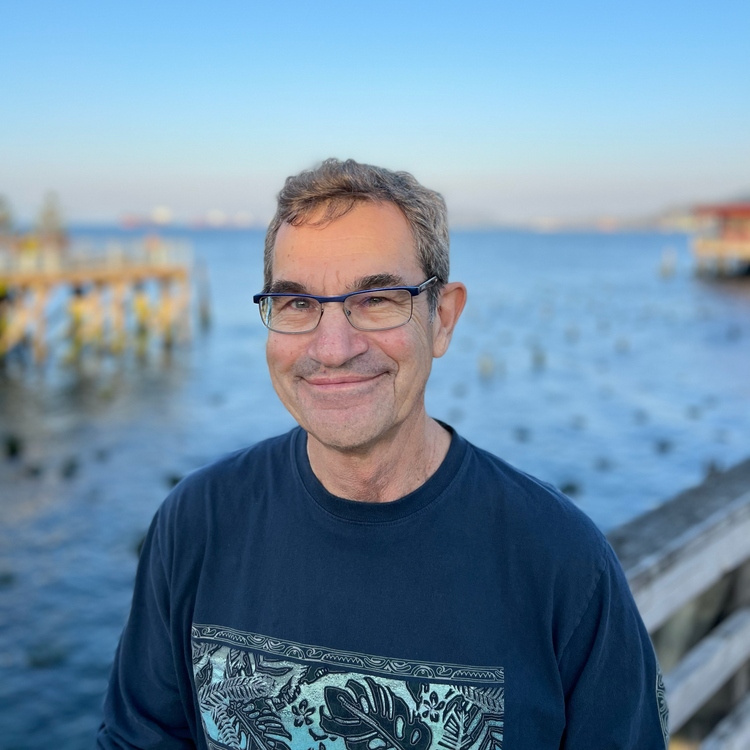
Tribute to Rich Lincoln, founder of Ocean Outcomes
|
|
|
|
Image courtesy of Ocean Outcomes |
|
|
|
With heavy hearts the GGGI acknowledges the tragic passing of Rich Lincoln, founder of GGGI member Ocean Outcomes. Rich was a dear colleague, mentor, and friend to many on the GGGI team. He was deeply passionate about fisheries and oceans and touched many lives over his lengthy career. Rich was an avid supporter of the GGGI, and his expertise was greatly appreciated during his participation in several ghost gear workshops and other events. For more details about Rich’s career with Ocean Outcomes, please see Ocean Outcomes’ latest newsletter.
|
Stay Tuned: The GGGI Small Grants application process is changing!
|
|
GGGI will be opening its small grants applications this fall with an updated application process. These changes are designed to reduce the workload for our applicants and make the review process smoother for GGGI leadership and its Expert Advisory Council. GGGI Members should keep an eye on their inbox for details about the new process, a revised application form, and information on how to apply this October.
|
Let’s Talk Ghost Gear Episode 16
|
|
GGGI Membership Specialist, Caitie Frenkel, hosted Episode 16 of Let’s Talk Ghost Gear on “ALDFG in the Pacific Northwest.” This episode featured short presentations from three GGGI members who conduct work in the region, highlighting their own projects in addition to collaborative work as part of the GGGI’s Pacific Northwest Signature Project. The presentations were followed by a panel discussion where presenters answered questions from a live audience and had an open discussion on the topic. This episode’s panelists included:
|
GGGI International Event Participation
|
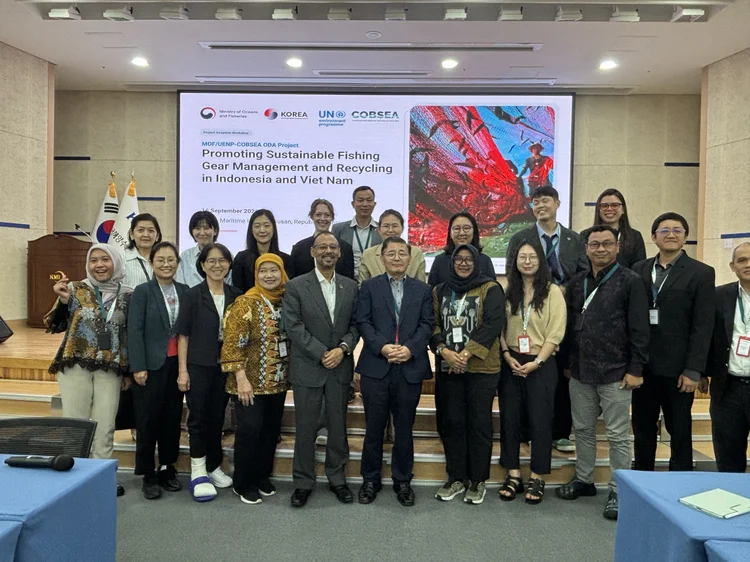
COBSEA Project Inception MeetingGGGI’s Membership Specialist, Caitie Frenkel, attended a project inception meeting hosted by the United Nations Environmental Program (UNEP) Coordinating Body on the Seas of East Asia (COBSEA) in Busan, South Korea, from September 16 to 17. Participants included COBSEA, government officials from South Korea and Indonesia, the Korean Maritime Institute, UNEP, and other potential partner organizations. Additionally, representatives from the government of Viet Nam provided virtual materials. Participants discussed a project to help promote sustainable fishing gear management and recycling in Indonesia and Viet Nam, including existing policies that could support the work, potential partner roles, and areas to prioritize.
|
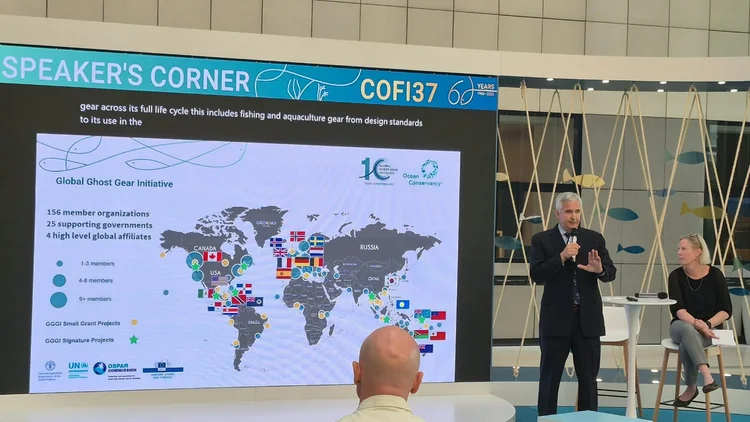
37th Session of the Committee on Fisheries (COFI)Ocean Conservancy’s Vice President of Conservation, Chris Dorsett, attended the 37th Session of the Committee on Fisheries (COFI37) held in Rome, Italy, from September 7 to 11. Chris joined Heather Wood, Director of International Fisheries Management and Negotiations, Fisheries and Oceans Canada (DF), in a Speaker’s Corner event titled “Establishing a Global Mandate for the Effective Management of Abandoned, Lost or Otherwise Discarded Fishing Gear [ALDFG].” This event was co-hosted by GGGI and DFO, and Chris discussed a holistic approach to preventing, mitigating, and remediating ghost gear across fisheries and aquaculture globally. Chris also participated in bilateral meetings with countries, enabling the GGGI to provide them with technical support for their interventions from the floor calling for more coordinated global action on ALDFG.
|
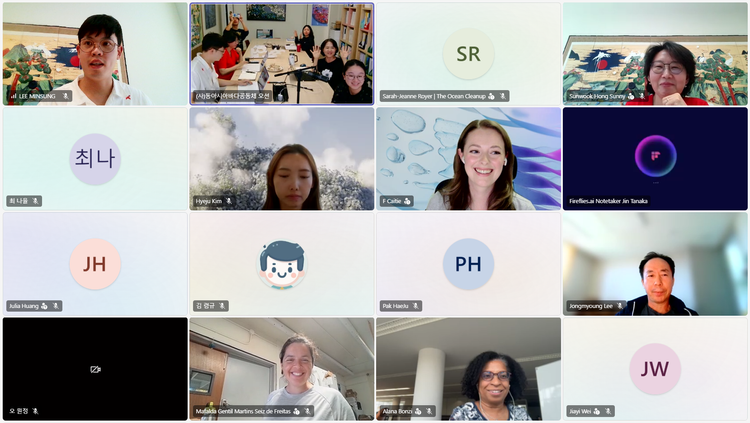
Our Sea of East Asia Network’s International SeminarGGGI member Our Sea of East Asia Network (OSEAN) invited GGGI Membership Specialist, Caitie Frenkel, to discuss her research on ALDFG along Canada’s Pacific Coast during their international seminar series. OSEAN’s biweekly seminar invites scientists from around the world to present on their published research, including topics related to ALDFG and marine plastics. Caitie presented her two publications: “Why, and where, is commercial fishing gear lost? A global review and case study of Pacific Canada” and “Predicting factors of fishing gear loss and distribution across Canada’s Pacific Ocean.” You may find more information on the webinar series on the OSEAN website. Additionally, you may watch a recording of Caitie’s presentation on their YouTube channel.
|
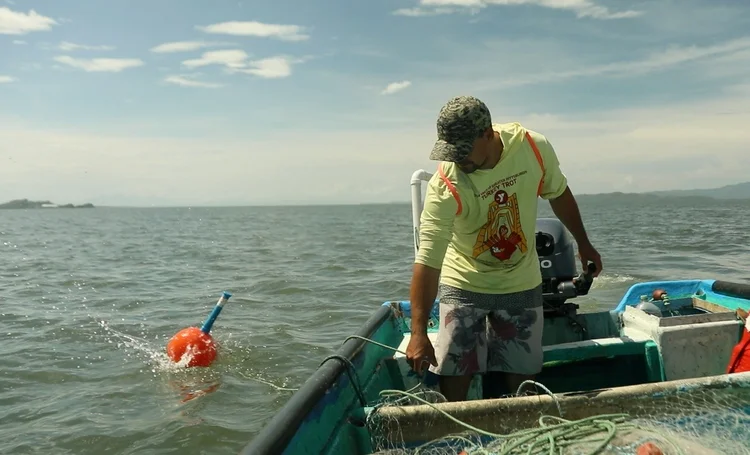
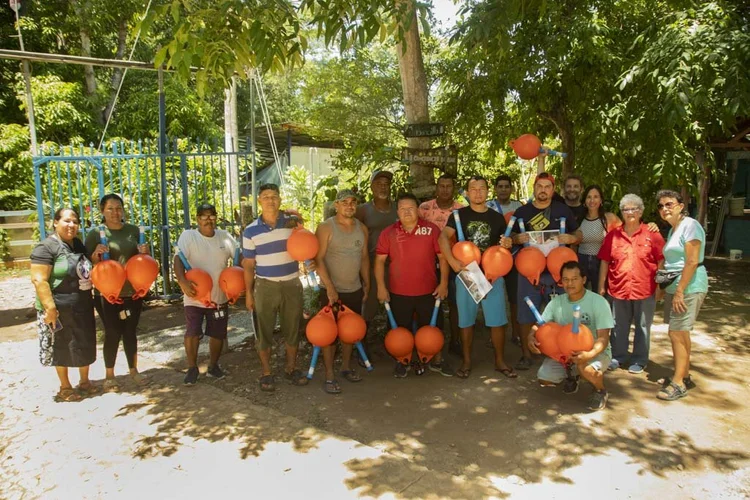
The Governments of Mexico and Costa Rica Engaged to Tackle Ghost GearOn July 29, the ICCF Group (International Conservation Caucus Foundation) and GGGI, with the support from Germany’s GIZ, facilitated a virtual Binational Dialogue between Mexico and Costa Rica on ALDFG. This event brought together government representatives from both countries, as both are developing new ALDFG policies. Costa Rica's new ALDFG law requires implementing regulations by November 2027, while Mexico has folded ghost gear management into its Sustainable Ocean Plan. The session pursued three goals: 1) presenting Costa Rica's first ALDFG predictive model; 2) identifying regional cooperation opportunities in Central and North America; and 3) fostering dialogue on the scale, impacts, and drivers of gear loss. Costa Rica's INCOPESCA and Mexico's Navy Secretariat (SEMAR) and Ministry of Foreign Affairs (SRE) gave presentations, alongside NRC's presentation of the aforementioned model. A direct dialogue channel was established between decision-makers on fishing gear loss. Costa Rica: Building an Evidence Base to Address Ghost GearAsociación Centroamericana para la Economía, la Salud y el Ambiente (ACEPESA) surveyed 219 fishers along Costa Rica’s Pacific and Caribbean coasts as part of GGGI’s Latin America work. ACEPSA used the FAO fisher-survey methodology, and FAO and GGGI provided training and technical support for this work. The survey identified the most common fishing gear types, management, and locations of gear loss. For example, underwater snags and poor weather conditions were the main causes of gear loss amongst the survey participants. The survey also highlighted areas to strengthen women's participation in ghost gear management, such as gear collection and repair, coastal cleanups, and community awareness activities. GGGI member Natural Resources Consultants (NRC) used these findings to develop a predictive model meant to identify areas where ghost gear is most likely to occur in Costa Rica. This model combined fisher survey data with Coast Guard mapping, ACEPESA information, and oceanographic variables (e.g., fishing effort, wind speed, bathymetry, fetch). The Costa Rica ghost gear predictive model provides an important baseline to support more targeted prevention, monitoring, and management of ghost gear nationally. Costa Rica Uses Smart Technology to Prevent Ghost GearIn 2023, Costa Rica formally joined the GGGI, strengthening its commitment to sustainable ocean management. Building on ACEPESA’s work since 2002 with fishers, the National Coast Guard Service, and INCOPESCA, GGGI is now supporting a pilot project in the Gulf of Nicoya to help prevent fishing gear loss through real-time monitoring technology from GGGI partner Buoy Fish. The pilot involves 14 gillnet fishers from two local fishing associations, eight from Asociación Pescadores Costa de Pájaros and six from Asociación Pescadores y Molusqueros de la Costa del Pacífico Litoral 06. The initiative builds on lessons from smart buoy pilots in Mexico and Canada. As part of the project, GGGI delivered a Best Practices for Fishing Gear Management workshop on July 29 in Costa de Pájaros, covering gear deployment, loss reporting and recovery, and end-of-life recycling. Together, technology and capacity-building are helping fishers prevent ghost gear and protect marine ecosystems.
|
Best Practice Framework for the Management of Recreational Fishing Gear (R-BPF)
|
|
The GGGI has been collaborating with Poseidon Aquatic Resource Management and Natural Resources Consultants to develop a Best Practice Framework for the Management of Recreational Fishing Gear (R-BPF). This project is funded by the National Oceanic and Atmospheric Administration’s (NOAA) Marine Debris Program and has, as with the other GGGI BPFs for wild capture and aquaculture gear, consisted of both desktop research and stakeholder engagement. The GGGI’s goal with the R-BPF is to fill the current knowledge gap around recreational ALDFG and round out our site of BPF documents, complementing the GGGI’s other two Best Practices Frameworks for the Management of Fishing Gear and Aquaculture Gear. We plan to release the R-BPF publicly before the end of 2026.
|
|
Several news articles about ghost gear were recently published by Mongabay, NOAA, Discover Wildlife, and The Conversation. Mongabay published two articles highlighting the harm caused by drifting fish aggregating devices (dFADs) in marine protected areas (MPAs) and the overall global footprint of dFAD impacts. Both articles highlighted recent papers published in ScienceAdvances on the global footprint of dFADs and the impacts of dFADs on the world’s MPAs. NOAA reported on two humpback whale entanglements this summer off the coasts of Monterey Bay and Oregon. Both whales were entangled in commercial trap gear and rescued through the combined efforts of whale watching vessels, fishermen, and animal entanglement experts. Discover Wildlife published this article in August providing an overview of ghost gear’s impacts on marine animals and habitats and highlighting a recent study by GGGI member Whale and Dolphin Conservation that illustrates the state of harbor waste reception facilities in the UK. The Conversation published this article in September summarizing recent research on the sources of marine debris, including ALDFG, washing up in the Seychelles. Surprisingly, they found that most of the ALDFG washing up on beaches in the Seychelles came from operations within its own exclusive economic zone.
|
|
Welcome To Our New GGGI Members!
The GGGI membership continues to grow! Please welcome our newest members: Big Fins Conservation, Alnitak, the Kenya Marine Fisheries and Research Institute, Chaint Afrique, and the Wildlife and Environment Society of South Africa. We look forward to our future work together!
|
|
|
|